Sustainability at Fraunhofer ISI

At Fraunhofer ISI, we not only conduct research on innovations for a sustainable world – we also strive to make everyday research and work at the institute as sustainable as possible.

The Fraunhofer-Gesellschaft as a whole has set itself the goal of reducing its emissions by 55 percent by 2030 and offsetting remaining emissions through real greenhouse gas reductions, as well as avoiding all emissions by 2045. As an employer we therefore also take responsibility that goes beyond our research.

Through our behavior, we want to play an active role in a changing society by promoting sustainability at all levels. The most important figures and processes are presented transparently on this page.

Sustainable Development Goals (SDGs)

Our contribution to implementing sustainable development as defined by the Sustainable Development Goals

Sustainability is increasingly being interpreted according to the Sustainable Development Goals (SDGs) of the United Nations' 2030 Agenda. The 17 goals of the agenda are intended to promote sustainable development at the commercial, social and ecological level. They cover a wide range of topics, including terrestrial ecosystems, water, climate and species protection, sustainable consumption, the management of natural resources and environmentally friendly energy supply. 

Our sustainability reporting is guided by the Fraunhofer-Gesellschaft's recommendation to use the internationally recognized standards of the Global Reporting Initiative (GRI) as a basis. The GRI (founded in 1997) is a non-profit foundation for global collaboration between companies, investors, rating agencies, auditors, associations, trade unions, non-governmental organizations and research scientists. It develops and publishes globally applicable guidelines that serve as a framework for the standardized presentation of economic, ecological and social performance.

In 2017, the Fraunhofer-Gesellschaft joined the United Nations Global Compact, the world's largest initiative for responsible corporate governance, to support and implement the universal principles of the international network. Based on these principles and the SDGs, Global Compact pursues the vision of a sustainable global economy.

As one of the Fraunhofer institutes, we also want to contribute to achieving these goals. Fraunhofer ISI contributes to implementing sustainable development on a variety of levels:

  • Through our research, the policy recommendations for politics, industry and society that result from it, and through our work in committees and advisory boards.
  • In the industrial engineering and workplace organization of our daily research work and the administrative staff of the institute's own building infrastructure.

The institute’s commitment: Our sustainability groups

In our sustainability groups, Fraunhofer ISI employees actively work together to make the institute more sustainable. Under the leadership of the sustainability officers, all employees in the groups have the opportunity to contribute and discuss suggestions. There are currently five groups dedicated to the following topics:

1. Mobility

This includes, among other things, commuting and business trips.

2. Energy

The focus here is on electricity and the demand for heating energy, as well as the introduction of an energy management system.

3. Procurement & Resources

This includes both the procurement and the subsequent disposal of consumer goods.

4. Buildings

Among other things, this includes water consumption, the building envelope and biodiversity for the existing building and the planned new building.

5. Food

This is about healthy and sustainable catering, e.g. through our own canteen.

Social sustainability

Aspects of social sustainability are addressed at ISI by the following positions:

Health management

contributes to employees’ physical well-being

Equal opportunities officer

equal opportunities in the workplace, compatibility of work and family life

Human Resources department

providing expertise on skills management and lifelong learning

Our current goals and measures

The sustainability officers meet regularly – in close consultation with the institute's management – to decide on specific sustainability goals and the measures needed to implement them. The institute is currently pursuing the following goals:


  • Mobility
    • Minimizing the greenhouse gas emissions from business trips
  • Energy
    • Continuous improvement of energy-related performance as part of the energy management system according to DIN EN ISO 50001
    • Optimization of heating settings by maximizing the use of the heat pump
  • Procurement & Resources
    • Implementing the Fraunhofer guidelines for sustainable procurement
    • Disposal of electronic waste for recycling
  • Buildings
    • Achieving certification according to the Assessment System for Sustainable Building (BNB) with Silver Standard for the planned new building, see press release
  • Food
    • Sustainable catering in the canteen

Area of activity: Ecology

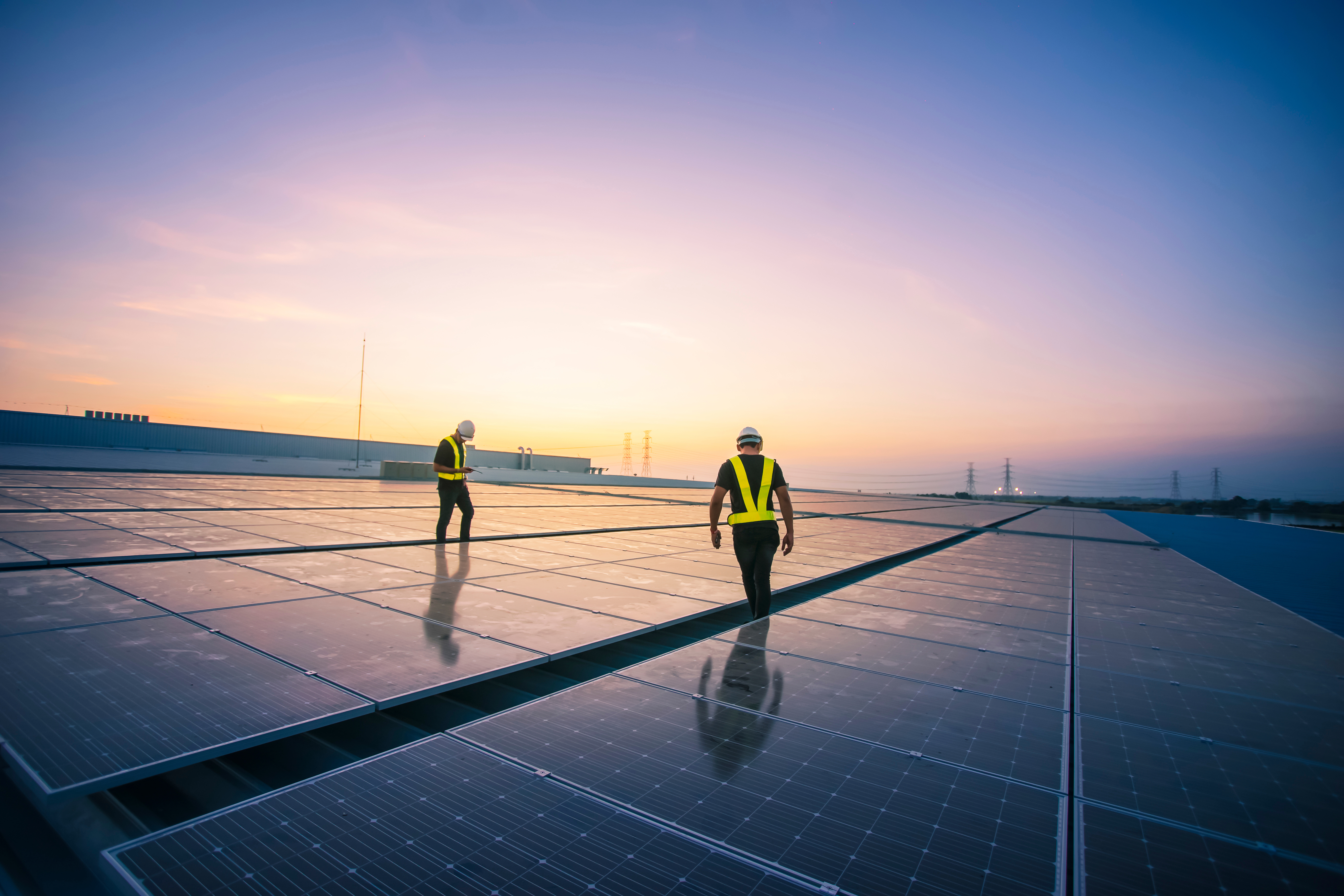
We at Fraunhofer ISI place a great deal of importance on sustainable action and economic activity:  Committed employees at the institute have been actively involved in the field of sustainability for many years and contribute their ideas. As early as the 1990s, the “ISI Power” association, an initiative of ISI employees, installed a photovoltaic system on the institute's roof when this was not yet possible for legal reasons within Fraunhofer. In late fall 2024, the existing heating system was replaced by a combination of heat pumps and a gas condensing boiler. In addition, employees have increasingly contributed to improving the institute's carbon footprint in recent years. Many have avoided traveling, taken the train more often instead of flying, or have come to Fraunhofer ISI by bike, on foot or by public transport instead of by car.

© shutterstock.com/ME Image

Click on the light blue boxes to find out more about our sustainability indicators across a range of topics. Unless otherwise stated, the figures shown refer to our institute’s main location at Breslauer Strasse in Karlsruhe.

  • Fraunhofer ISI now has five locations (two in Karlsruhe, one in Leipzig, a representative office in Berlin as well as the Joint Innovation Hub in Heilbronn). The institute’s building on Breslauer Strasse in Karlsruhe is the largest and longest standing of these locations, as well as the only one owned by the institute. From March 2020, additional offices were leased in Karlsruhe Technology Park (Emmy-Noether Strasse). Over time, the institute expanded its office footprint, leasing additional premises with office and meeting facilities in Heilbronn from 1 January 2023 and in Berlin from October 2024. Through the integration of two of Fraunhofer IWM departments in Leipzig other premises were also added there from January 1, 2025.

  • In 2025, the institute’s premises on Breslauer Strasse in Karlsruhe accounted for approximately three-quarters of the total energy consumption of all the locations combined. Since the office space at the newly added locations is leased, the options for influencing energy consumption there are very limited. For this reason, only the energy consumption of the institute’s building on Breslauer Strasse is examined below.

    The institute building’s energy consumption comprised electricity and natural gas and totaled 668 megawatt-hours (MWh) in 2025. Up until 2022, roughly the same amount of gas and electricity was required. In 2025, however, electricity consumption accounted for just under three-quarters of total energy consumption.

    In the fall of 2024, the heating systems, which were more than 30 years old, were replaced by a combination of two air-water heat pumps (128 kW) and a gas condensing boiler (220 kW). The goal is to use the gas boiler as little as possible and to meet most of the building’s heating needs using the heat pumps. Before deciding to invest in the new system, different variants were compared in terms of their economic efficiency and CO2 emissions. This option was selected because of the short remaining period that Fraunhofer ISI will use the institute’s building due to the planned new building.

    In addition to electricity purchased from the public grid, a photovoltaic system has been helping to power the institute building since the end of October 2025. In 2026, it will cover just under eight percent of the building’s electricity consumption. Until mid-2024, two combined heat and power (CHP) units also contributed to the institute building’s on-site electricity generation. From 2014 to 2022, they together covered an average of 12 percent of energy consumption. In 2023, their share dropped to 3 percent, primarily due to temporary outages. Furthermore, the output of the CHP units was reduced in the fall of 2022 as a result of the gas shortage.

    The number of employees does not seem to have a major impact on the energy consumption of the institute’s building. In 2014/2015, some employees were relocated to a different building due to asbestos removal in the west wing, but energy consumption remained more or less constant. The obligation or recommendation to work from home due to Covid-19 brought about an eleven percent drop in electricity consumption in the years 2020 and 2022.

    Gas consumption for the institute building totaled 173 MWh in 2025. This represents a significant decrease compared to 2024 (approximately 238 MWh), which is primarily attributable to the switch to the new heating system. Due to a roughly one-and-a-half-month outage of the heat pump, the gas condensing boiler had to be used more often. In 2023, the institute building’s gas consumption, including gas consumption for the CHP units, totaled 201 MWh. Deducting the gas needed for electricity generation results in just under 187 MWh of gas required for heating. This was significantly lower than the figures for 2022 (350 MWh) and 2021 (363 MWh). The decisive factor was that Fraunhofer ISI took short-term gas-saving measures to help prevent a gas shortage in the winter of 2022/2023. For example, the heating in one whole corridor was turned down to 16°C. The employees affected, including the institute’s directors, moved to a different corridor during this winter. In addition, employees were made more aware of this issue and advised to only heat their offices to a maximum of 19°C, among other things. Heating settings were adjusted, such as extending the overnight temperature reduction to include weekends. Retaining some of the less drastic measures also resulted in a decrease of gas consumption in the winter of 2023/2024 compared to the winter of 2021/2022. Hydraulic balancing was carried out in the fall of 2023 before the onset of the heating period.

    At least twice a year, employees are made aware of energy-saving measures, more specifically, “heating correctly” through emails, energy-saving posters, and short presentations at institute or work council meetings.

    Energy consumption in the institute's building
    © Fraunhofer ISI
    Energy consumption in the institute's building
  • To lower the institute’s CO2 emissions, Fraunhofer ISI is part of the Fraunhofer-wide energy efficiency and climate protection network (EEKN). The EEKN provides a platform for a moderated exchange of experiences and ideas among participating Fraunhofer institutes and external consultants. The goal of this network is to achieve a lasting increase in energy efficiency and a tangible decrease in energy costs and CO2 emissions at the institutes. The idea of the network is based on earlier research projects conducted by the institute. Therefore, the EEKN was initiated and managed within the Fraunhofer-Gesellschaft at the initiative of Fraunhofer ISI. Participation in the network was confirmed by the Initiative for Energy Efficiency and Climate Protection Networks (IEEKN). 

    Fraunhofer ISI has been certified for energy management in accordance with the DIN EN ISO 50001:2018 standard since May 2026 (see listing of certificates locations). The primary goal of ISO 50001 is to continuously improve energy efficiency and reduce energy consumption and energy-related CO2 emissions.

    Meters for an energy monitoring system have been installed in the institute building. In future, software will enable energy use to be monitored.

    In late October 2025, Fraunhofer ISI commissioned a new PV system with 64 modules and a total capacity of 30.6 kWp for on-site power generation on the roof of the institute’s building. The system is the result of a collaboration between Fraunhofer ISI and the “ISI Power” association. The association was founded by Fraunhofer ISI employees, and it operated the old system for nearly 30 years. Due to changes in the regulatory framework, it is no longer necessary to operate the system through the association. In 2026, the new PV system was able to cover nearly eight percent of the electricity consumption at Breslauer Strasse. The procurement of a larger system was taken into consideration but was regarded as not economically viable for various reasons.

    If the emission factor of the German electricity mix is applied to electricity consumption, CO₂ emissions in 2025 decreased marginally compared to the two previous years. Fraunhofer ISI procures green electricity through the Fraunhofer-wide framework agreement, which was primarily implemented via certificates of origin until 2025. Starting in 2026, the Fraunhofer-Gesellschaft will increasingly organize its electricity supply through centrally managed portfolio management. This is intended to limit economic risks, increase security of supply and to simplify the targeted integration of renewable energy, for example through power purchase agreements and on-site generation. Assuming an emissions factor of zero kg CO2/year for the green electricity purchased, total emissions in 2025 could drop from 205,000 kg CO2/year to 35,000 kg CO2/year.

    CO2 emissions from energy consumption in the building
    © Fraunhofer ISI
    CO2 emissions from energy consumption in the building
  • In 2022, Fraunhofer ISI employees traveled a total of more than 600,000 kilometers on business trips, generating around 80.4 metric tons of CO2 or the equivalent in greenhouse gases. This is one of the lowest figures since records began in 2010 and corresponds to a decrease of roughly 86% compared to the peak of 588 metric tons in 2013. The reason for this dramatic reduction is the “aftermath” of the COVID-19 crisis and the resulting changes in travel behavior. Since then, digital and hybrid formats for sharing information about research projects have increased significantly. Due to a change in 2022 in the way in which rail travel emissions are reported, they have not been included yet.

    In terms of air travel, business trips undertaken on behalf of Fraunhofer ISI generated a total of 78.6 tons of greenhouse gases in 2022, which accounted for 95 percent of all CO₂ emissions from business trips. However, these emissions were fully offset by purchasing the corresponding CO₂ certificates. This was followed by rail travel, which accounted for just under 2 metric tons (2.5 percent), and car travel, which accounted for 1.7 metric tons (2.1 percent).

    As in previous years, the most frequently used rail route within Germany in 2022 was the Karlsruhe-Berlin route, with a total of 424 trips.

    Emissions caused by business trips
    © Fraunhofer ISI
    Emissions caused by business trips
  • The Karlsruhe location

    In 2025, employees of Fraunhofer ISI in Karlsruhe traveled nearly 1.6 million kilometers on their way to work. This corresponds to around 4,000 kilometers per person. By far the most popular means of transport to get to the institute is still the bicycle:

    • 47 percent of employees in Karlsruhe cycle to Fraunhofer ISI (43 percent on regular bicycles and 4 percent on e-bikes).
    • 28 percent of employees commute to Fraunhofer ISI by car (23 percent drive internal-combustion-engine vehicles and 5 percent drive electric vehicles).
    • 22 percent of employees travel by train (14 percent use local public transportation and 8 percent use long-distance or regional rail services).
    • Two percent walk to work.

    On their way to work (by car or train), Fraunhofer ISI employees generated a total of 141 metric tons of CO2 equivalents per year. This corresponds to approximately 353 kilograms of CO2 per person.

    Modes of transport to work
    © Fraunhofer ISI
    Modes of transport to work in Karlsruhe

    The Leipzig location

    In 2025, employees of Fraunhofer ISI Leipzig traveled approximately 400,000 kilometers on their way to work. This corresponds to around 3,000 kilometers per person. The most popular mode of transportation for getting to the institute’s building in Leipzig is the train:

    • 44 percent of employees travel by train (26 percent use local public transportation and 18 percent use long-distance or regional rail services).
    • 41 percent of employees cycle.
    • Eight percent walk.
    • Seven percent of employees commute by car (six percent drive internal-combustion-engine vehicles and one percent drive electric vehicles).

    Due to the relatively low proportion of employees using cars with internal combustion engines, employees in Leipzig generated a total of only 13 metric tons of CO₂ equivalents. This corresponds to approximately 100 kilograms of CO2 per person. Consequently, the greatest potential for emissions reductions for Fraunhofer ISI as a whole lies in increasingly phasing out the use of cars with internal combustion engines.

    Modes of transport to work
    © Fraunhofer ISI
    Modes of transport to work in Leipzig

    Across all the locations

    Fraunhofer ISI is participating in the joint research project LamA - Charging at Work. In May 2022, two charging stations, each with two charging points, were installed, where Fraunhofer employees as well as external private individuals can charge their vehicles for a fee. Company vehicles are also charged at the charging stations.

    To raise awareness of emissions caused by commuting, Fraunhofer ISI took part in the Stadtradeln (city cycling) campaign for the first time in 2022. During the three weeks of the respective campaigns, participating employees cycled between 5,300 and 8,000 kilometers.


    Bike Repair Café

    The “Bike Repair Café” event took place for the first time in 2025 and again in the summer of 2026 in the courtyard of the Fraunhofer ISI on Breslauer Strasse in Karlsruhe. Thanks to the active support and, above all, the technical expertise of the staff, several employees’ bicycles were professionally repaired or serviced. They provided valuable tips and guidance on how to help themselves, ensuring that employees could travel safely and reliably to the institute building every day. 

  • The following figures refer exclusively to the institute building on Breslauer Strasse in Karlsruhe (main location), which is owned by the Fraunhofer-Gesellschaft.

    There are several different areas where water is used at Fraunhofer ISI. Drinking water is used primarily in the washrooms with toilets, at the water dispenser in the cafeteria, in kettles for tea and in coffee machines, as well as in the cafeteria itself, for cleaning the building and in the shower and changing room in the basement, which is used, for example, by cyclists. During the hot summer months, drinking water is also used in extremely dry conditions to water bushes, hedges and green facades.

    The actual water consumption in Breslauer Strasse is directly related to the number of employees working on site. Especially during the years of the COVID-19 pandemic from 2020 to 2022, when employees were required or encouraged to work from home, water consumption dramatically decreased. The hot summer appears to be the cause of the increased water consumption in 2023.

    Data on water consumption in leased buildings is not available.

    Water consumption
    © Fraunhofer ISI
    Water consumption
  • Paper usage

    The following figures refer to Fraunhofer ISI’s locations in Karlsruhe and Leipzig.

    Since 2013, Fraunhofer ISI has exclusively used recycled paper in its printers and copiers, and double-sided printing is set as the default.

    The amount of new A4 paper ordered fell over the years from around 1.6 million sheets in 2011 to an all-time low of 150,000 sheets (~ 0.7 metric tons) in 2023. The most recent sharp decline coincided with the Covid-19 pandemic, which reduced the amount of new A4 paper ordered by half. The amount of A3 paper used also decreased. However, since this paper is purchased in advance to last for several years, the decrease is not as clearly visible. In 2024 and 2025, paper usage remained at this low level.

    Paper usage
    © Fraunhofer ISI
    Paper usage

    Cleaning supplies

    Sustainability criteria (e.g., giving preference to recycled paper) are also taken into account when purchasing so-called washroom paper products (e.g., paper towels, toilet paper).

    With regard to the use of cleaning products (such as vinegar-based cleaners, descalers, dishwashing detergent and glass cleaner), which are used primarily in the cafeteria, Fraunhofer ISI strives to prioritize cleaning products that have appropriate eco-certifications. These include, for example, the Blue Angel at the national level and the EU Ecolabel at the European level. Test results from relevant publications (e.g., Öko-Test) are also taken into account during procurement.

  • After an increase in 2020, the volume of residual waste at the Breslauer Strasse site dropped to a consistently low level of less than two metric tons. In recent years, the reduction was driven not only by the COVID-19 pandemic and the subsequent work-from-home and flexible workspace policies but also by the relocation of employees to the secondary site in the Technology Park in 2020.

    Recyclables have remained relatively constant in recent years at approximately seven metric tons per year, whereas a significant and steady increase has been observed in the disposal of wastepaper. However, as reported under “Paper usage", the amount of paper procured has not increased in recent years but has remained constant; therefore, the paper waste likely consists of the disposal of obsolete archives that are no longer physically needed.

    Waste
    © Fraunhofer ISI
    Waste
  • In 2025, the Fraunhofer-Gesellschaft entered into a Fraunhofer-wide framework agreement with AfB gGmbH in Ettlingen, which governs the transfer of old electronic equipment (e.g., laptops, monitors, smartphones, etc.) from Fraunhofer institutes, such as Fraunhofer ISI, to the recycling company AfB.

    At the beginning of 2026, used electronic devices from Fraunhofer ISI were handed over to AfB for the first time. In an initial collection, approximately 350 IP phones, as well as laptops, docking stations, and monitors, amounting to about seven pallets, were handed over to AfB. Further deliveries are planned.

    Depending on the age, condition and residual value of the old electronic devices, they are primarily refurbished or reconditioned and subsequently resold by AfB, thereby ensuring their reuse. Old devices that cannot be resold are either recycled by material type or disposed of properly. Regardless of the path the devices take, all data storage media within them are erased using certified deletion processes.

  • In addition to handing over used electronic devices to AfB, employees’ personal items, both electronic and non-electronic, are kept in circulation for as long as possible. This is why the “ISI Exchange Evening” is held once a year in the courtyard on Breslauer Strasse. The idea behind it is: “One wo:man’s trash is another wo:man’s treasure”.

    In addition, a new digital exchange platform at ISI has been available to all employees on the intranet since 2025. Here, employees can post offers and requests, covering a wide range of events and activities, including event announcements, tickets to give away, tools needed, and children’s toys seeking a new home.

Previous sustainability reports

In 2015 and 2019, our sustainability reports were published as digital brochures in German, which are available for download here.


Sustainability report 2019


Sustainability report 2015

The Fraunhofer-Gesellschaft's sustainability report

In its sustainability report, the Fraunhofer-Gesellschaft illustrates how sustainability aspects are an integral part of the organization's activities and shows which sustainability goals and measures should be consistently pursued in the future.


Sustainability report 2025